
5 国家儿童器官移植统计数据
5.1 概览
各器官类型的儿童移植年度趋势如图1所示。从2015年到2024年,儿童肾脏、肝脏和肺脏移植例数分别增长了4.9倍、2.1倍和7.5倍。由于中国人体器官分配与共享计算机系统的心脏分配系统于2018年底才建立,2019年前的心脏移植数据存在缺失;若仅追溯至2019年,2019年至2024年间的心脏移植例数增长了2.5倍。
值得注意的是,尽管心脏和肾脏分配给儿童等待者的份额有所上升,但在肝脏和肺脏移植领域,儿童等待者在总分配量中的占比尚未显现出类似的增长趋势(见图2)。
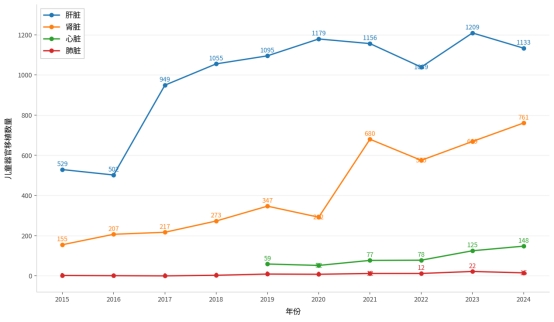
图1 2015年至2024年中国分器官类型儿童器官移植案例数量。Y轴表示年度移植案例数;X轴表示年份。由于COTRS系统于2018年底启用了心脏分配功能,因此心脏移植数据涵盖范围为2019年至2024年。
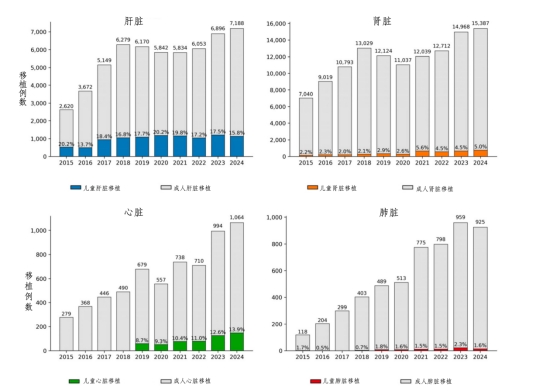
图2 2015年至2024年中国儿童器官移植的年度趋势。每个分图展示了肝脏、肾脏、心脏和肺脏移植中,儿童病例占总移植量的比例。柱状图代表年度移植总量,其中彩色区域表示儿童病例,灰色区域表示成人病例。由于心脏分配系统于2018年底在COTRS中启用,心脏移植数据自2019年起开始显示。
在捐献者构成与器官来源方面,2015年至2018年间儿童捐献者占公民逝世后捐献总数的11.40%,2019年降至8.20%(共477例)。2022年的数据显示,儿童肝移植中63.6%的肝脏来源于亲属活体捐献,肾脏移植则以公民逝世后捐献为主(占93.3%),其中88.0%的捐献者为儿童。
5.2 移植中心分布
截至2025年,中国共有187家医院具备器官移植资质,其中包括:肝脏移植(117家)、肾脏移植(158家)、心脏移植(58家)、肺脏移植(36家)、胰腺移植(33家)以及小肠移植(24家)[10]。移植活动主要集中于东部主要省份和一线城市,中西部地区资源相对匮乏,移植数量明显偏少;器官分配以省内为主,跨区域调配较为有限[12]。
在儿童移植中心分布方面,各器官领域均呈现明显的区域聚集态势。肾脏移植领域,上海复旦大学附属儿科医院、广州中山大学附属第一医院和郑州大学第一附属医院三大中心的手术量合计占全国总量的三分之一[22]。肝脏移植主要依托上海仁济医院和天津市第一中心医院两大中心开展[23, 24]。心脏方面,北京阜外医院不仅是全国心脏移植总量最高的医院,也是儿童心脏外科手术量最大的中心[25]。肺脏移植的集中程度尤为突出,2024年全国共完成15例,其中11例在浙江大学医学院附属第二医院完成,2例在广州医科大学附属第一医院完成,无锡市人民医院和中国科学技术大学附属第一医院各完成1例。
目前,除肺脏移植外,各医疗中心开展儿童移植的具体数量尚无全国性数据公开发布,相关信息有待进一步完善。
5.3 儿童器官移植适应证
2024年儿童心肺移植的主要原发病因如图3A、B所示。心脏移植方面,非缺血性心肌病是首要原因,占总病例的77%,其次为先天性心脏病(15.2%)。肺移植方面,闭塞性细支气管炎是最主要病因(59.1%),继发性与原发性肺动脉高压次之(各占13.3%)。
《中国器官捐献和移植发展报告》未详细列出儿童肾脏和肝脏移植受者的原发疾病,现有数据主要来源于单中心或多中心研究。就肝脏移植而言,上海仁济医院的数据显示,胆汁淤积性肝病(尤其是胆道闭锁)和代谢性肝病是最常见的适应证(见图3C)[23]。就肾脏移植而言,针对上海、广州和郑州三大中心的分析显示,肾小球肾炎(16.4%)和激素耐药型肾病综合征(14.7%)是最常见的已知原发病(见图3D)[22];然而,53.3%的患者肾衰竭病因仍不明确。需要指出的是,上述肾脏数据来源于2011至2018年的研究,
且研究对象涵盖了18岁患者,在数据时效性和人群界定上存在一定局限。
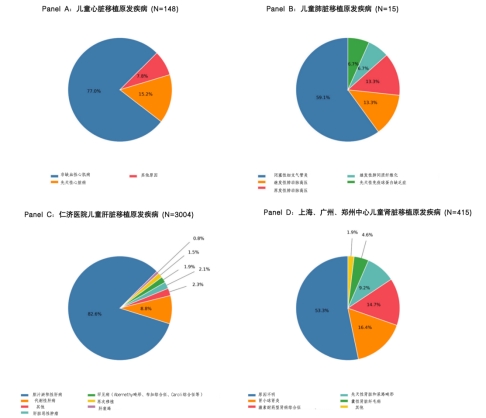
图3 中国儿童心、肺、肝、肾移植患者最常见的原发病。饼图分别展示了心脏(A)、肺脏(B)、肝脏(C)和肾脏(D)移植在儿童患者中的各项适应证占比。数据来源因器官而异:心脏(A)和肺脏(B)移植数据来自国家统计数据(2024年);肝移植(C)数据来自上海仁济医院(2006—2022年);肾移植(D)数据来自一个多中心队列(2011—2018年),包括复旦大学附属儿科医院(与上海长海医院合作)、中山大学附属第一医院(广州中心)以及郑州大学第一附属医院(郑州中心)。
5.4 临床预后
心脏移植方面,儿童与成人均取得了较高的早期生存率,30天生存率分别为94.7%和91.7%,1年生存率均保持在80%以上(见表3)。在中远期随访中,儿童等待者保持微弱但持续的生存优势:3年生存率(75.0% VS. 74.2%)和5年生存率(70.0% VS. 69.1%)两组结果接近,但儿童组略高。
肺移植方面,儿童的早期生存优势更为显著,30天生存率(91.0%)高于成人(84.0%)。此后差距持续扩大:术后1年儿童生存率维持在79%以上,而成人降至60.1%;3年生存率儿童(64.9%)亦明显高于成人(45.7%)。
肾脏和肝脏移植的儿童专项数据目前尚无国家层面的系统报告,现有结果来源于单中心或多中心研究。肾脏移植方面,多中心研究显示儿童受者术后1年和5年生存率分别为97.6%和95.5%,与总人群(97.7%和94.6%)基本持平[11]。肝脏移植方面,单中心大型回顾性队列研究显示儿童长期预后明显优于总人群,1年、5年和10年生存率均超过90%,而总人群1年和5年生存率分别为84.2%和66.8%(见表3) [11]。
表3 不同数据来源下心、肺、肾、肝移植术后成人与儿童受者生存率对比
| 器官
|
年龄
分组
|
30天
生存率(%)
|
3个月
生存率
(%)
|
6个月
生存率
(%)
|
1年
生存率
(%)
|
3年
生存率
(%)
|
5年
生存率
(%)
|
10年
生存率
(%)
|
数据来源
|
| 心脏
|
成人
|
91.7
|
—
|
—
|
80.1
|
74.2
|
69.1
|
—
|
RODTC
(2015–2024)[12]
|
| —
|
儿童
|
94.7
|
—
|
—
|
87.6
|
75.0
|
70.0
|
—
|
|
| 肺脏
|
成人
|
84.0
|
74.1
|
67.6
|
60.1
|
45.7
|
—
|
—
|
|
| —
|
儿童
|
91.0
|
81.8
|
79.2
|
79.2
|
64.9
|
—
|
—
|
|
| 肾脏
|
全年龄段
|
—
|
—
|
—
|
97.7
|
96.2
|
94.6
|
—
|
RODTC
(2015–2024)[12]
|
| —
|
儿童
|
—
|
—
|
—
|
97.6
|
—
|
95.5
|
—
|
多中心队列
(2011–2018)[22]
|
| 肝脏
|
全年龄段
|
—
|
—
|
—
|
84.2
|
74.0
|
66.8
|
—
|
RODTC
(2015–2024)[12]
|
| —
|
儿童
|
—
|
—
|
—
|
95.1
|
—
|
93.1
|
91.8
|
单中心队列
(2006–2022)[26]
|
6 质量控制措施
中国已建立四大综合性登记系统,对移植受者实施终身随访,涵盖肾脏、肝脏、心脏和肺脏移植四个领域[17]。各系统对患者预后进行持续追踪,并与国家死因监测等国家级数据库定期交叉核对,以识别潜在的漏报死亡病例,从而保障生存率统计的准确性与完整性。
除随访职能外,四大登记系统亦作为科研平台,通过大规模数据的采集与分析,推动手术技术改进、优化术后管理,并为国家医疗质量控制中心提供数据支撑,促进移植临床实践的持续循证改进[28]。
7 讨论与未来展望
在上述质量控制体系的支撑下,中国器官移植事业已取得长足进展,但2023年每百万人口移植量(16.67例)仍低于全球平均水平(25.84例)及美国(139.68例)、德国(43.77例)、日本(20.64例)等国[9]。鉴于器官移植数量与人均国民总收入之间存在显著相关性 [29],预计中国移植活动的增长势头仍将持续。
自2018年器官分配政策修订以来,儿童移植率显著上升:2024年肾移植等待名单中,儿童器官分配率达34.40%,而成人仅为7.46%[12],前者约为后者的4.6倍。随着移植规模的扩大,临床实践中针对不同年龄段的手术方案得以持续优化,个体化免疫抑制方案也日益完善,这在肝脏和肾脏移植领域表现尤为突出。
在区域协作方面,中国大陆已采取多项举措推动与香港、澳门地区的器官移植合作。2017年澳门正式纳入中国人体器官分配与共享计算机系统(COTRS),扩大了区域器官供应[32]。2022年完成的首例经COTRS系统由内地向香港的跨境心脏移植,验证了跨法律管辖区协作的可行性[33]。2023年,国家卫生健康委员会与香港医务卫生局就制度化合作进行了高层讨论;同年12月发布的《人体器官捐献和移植条例》修订版(2024年5月1日起生效)亦就跨区域协调作出进一步规范,但法律与监管层面的壁垒仍有待克服。此外,中国香港与台湾地区之间亦有器官互享的相关报道[34, 35]。
尽管上述进展显著,儿童器官移植领域仍面临多重挑战。在数据层面,国家报告对儿童专项信息的记录尚不完整,捐献者和等待者人口统计学特征、具体适应证及肾脏与肝脏移植的生存率数据均存在缺口。与成人移植相比,长期随访数据及儿童专项临床基准的积累也相对不足。在资源层面,儿童移植在整体移植活动中占比较小,供体来源有限、器官尺寸匹配困难,以及对高度专业化多学科团队的需求,导致相关服务趋于集中在少数大容量中心,区域可及性不均衡的问题依然突出。
展望未来,持续加强国家登记体系建设、扩大儿童移植专业培训规模、进一步规范临床诊疗规程,对于保障公平可及并持续提升中国儿童移植受者的临床预后至关重要。与此同时,填补现有数据空白、推动港澳乃至更广泛的区域协作制度化,亦是推动中国儿童器官移植事业持续发展的重要方向。
8 结论
在完善的法律框架、集中统一的分配体系与持续强化的伦理监管共同支撑下,中国儿童器官移植已进入稳步扩张与结构成熟阶段。
2018年"儿童优先"分配政策的实施,以及中国人体器官分配与共享计算机系统的持续完善,显著改善了终末期器官衰竭患儿的移植可及性与临床预后。
然而,核心挑战依然不容忽视:移植物长期存活率数据匮乏、移植资源地区分布不均,以及儿童捐献者持续短缺。持续加强国家登记系统建设、推动多中心协作,并加大儿童移植专科培训与基础设施投入,是填补上述差距的必要路径。
随着中国持续推进临床实践与国际伦理及临床标准的深度对标、提升儿童移植数据在同行评议期刊中的学术可见性,并进一步深化跨区域协作机制,中国儿童器官移植的整体质量、公平性与可持续性必将得到持续提升。
作者贡献
Björn Nashan与Haibo Wang负责研究构思;Anna Liu与Chenxin Song负责数据获取与分析、文献检索、图表制作及初稿撰写;所有作者均参与了数据解释与定稿修改,并批准提交该文稿。
资助声明
作者无须报告任何资助信息。
利益冲突
作者声明不存在任何利益冲突。
数据可用性声明
支持本研究结论的数据可公开获取自《中国器官捐献和移植发展报告》。
参考文献
1. World Bank, "GDP (Current US$) – China," https://data.worldbank.
org/indicator/NY.GDP.MKTP.CD?locations=CN.
2. World Bank, "Rural Population (% of Total Population)—China,"
https://data.worldbank.org/indic ator/SP.RUR.TOTL.ZS? locat
ions=CN.
3. World Health Organization, "Health Data Overview for the People's
Republic of China," https://data.who.int/countries/156.
4. J. Zhang, D. Zhao, and X. Zhang, "China's Universal Medical Insurance Scheme: Progress and Perspectives," BMC Glob Public Health 2, no.
1 (2024): 62, https://doi.org/10.1186/s44263-024-00096-9.
5. P. T. McEnery, D. M. Stablein, G. Arbus, and A. Tejani, "Renal Transplantation in Children. A Report of the North American Pediatric
Renal Transplant Cooperative Study," New England Journal of Medicine 326, no. 26 (1992): 1727–1732, https://doi.org/10.1056/nejm199206
253262602.
6. P. S. Verghese, "Pediatric Kidney Transplantation: A Historical Review," Pediatric Research 81, no. 1–2 (2017): 259–264, https://doi.org/10.
1038/pr.2016.207.
7. A. Moudgil, V. R. Dharnidharka, K. E. Lamb, and H. U. MeierKriesche, "Best Allograft Survival From Share-35 Kidney Donors Occurs in Middle-Aged Adults and Young Children-An Analysis of OPTN
Data," Transplantation 95, no. 2 (2013): 319–325, https://doi.org/10.
1097/TP.0b013e3182719203.
8. U. Baumann, V. Karam, R. Adam, et al., "Prognosis of Children Undergoing Liver Transplantation: A 30-Year European Study," Pediatrics
150, no. 4 (2022): 424.
9. Global Observatory on Donation and Transplantation (GODT),
"Organ Donation and Transplantation Activities 2023 Report," (2023),
https://www.transplant-observatory.org/wp-content/uploads/2024/12/
2023-data-global-report-17122024.pdf.
10. B. Nashan, W. Haibo, and H. Jiefu, "Legal Framework on Organ Donation and Transplantation in China," Transplantation, Epub ahead of
print, (2026), https://doi.org/10.1097/TP.0000000000005623.
11. H. Jiefu, "China Organ Transplantation Development Foundation,"
Report on Organ Transplantation Development in China 2024, (2025),
https://www.tup.tsinghua.edu.cn/en/book_11428801.html.
12. National Health Commission of the People's Republic of China, "Notice on the Issuance of the Basic Principles and Core Policies of Organ
Distribution and Sharing in China," https://www.nhc.gov.cn/yzygj/
c100067/201808/d7680e55e35b42489be9ec1ddc7d67df.shtml.
13. The State Council of the People's Republic of China, "Regulation on
Human Organ Donation and Transplantation," https://www.gov.cn/
zhengce/content/202312/content_6920195.htm.
14. Health Resources & Services Administration, "OPTN Policy,"
(2025), https://www.hrsa.gov/sites/default/files/hrsa/optn/optn_polic
ies.pdf.
15. Eurotransplant, "Eurotransplant Manual," https://www.eurotransp
lant.org/allocation/eurotransplant-manual.
16. H. Jiefu, "China Organ Transplantation Development Foundation,"
Report on Organ Transplantation Development in China (2015–2018),
(2020), https://www.tup.tsinghua.edu.cn/en/book_08327601.html.
17. H. Jiefu, "China Organ Transplantation Development Foundation,"
Report on Organ Transplantation Development in China 2019, (2020),
https://www.tup.tsinghua.edu.cn/en/book_09105001.html.
18. H. Jiefu, "China Organ Transplantation Development Foundation," Report on Organ Transplantation Development in China 2020,
(2022), https://www.zhangqiaokeyan.com/book-cn/0815012764
07.html.
19. H. Jiefu, "China Organ Transplantation Development Foundation,"
Report on Organ Transplantation Development in China 2021, (2022),
https://book.qq.com/book-detail/53749468.
20. H. Jiefu, "China Organ Transplantation Development Foundation,"
Report on Organ Transplantation Development in China 2022, (2024),
https://weread.qq.com/web/reader/39d32c00813aba113g019e62kc8132
2c012c81e728d9d180.
21. H. Jiefu, "China Organ Transplantation Development Foundation,"
Report on Organ Transplantation Development in China 2023, (2025),
https://www.tup.tsinghua.edu.cn/en/book_11037401.html.
22. Q. Shen, X. Fang, X. Man, et al., "Pediatric Kidney Transplantation
in China: An Analysis From the IPNA Global Kidney ReplacementTherapy Registry," Pediatric Nephrology 36, no. 3 (2021): 685–692,
https://doi.org/10.1007/s00467-020-04745-7.
23. Q. Xia and M. X. Feng, "Challenges for Pediatric Liver Transplantation in the Mainland of China: Where We Are and Where to Go.
Reflections From Worldwide Largest Pediatric Liver Transplantation
Program," Hepatobiliary & Pancreatic Diseases International 24, no. 1
(2025): 35–38, https://doi.org/10.1016/j.hbpd.2024.11.005.
24. C. Sun, Z. Song, N. Ma, et al., "The Management and Outcomes of
ABO-Incompatible Pediatric Liver Transplantation: Experience of a
Single Chinese Center," Journal of Pediatric Surgery 55, no. 12 (2020):
2647–2652, https://doi.org/10.1016/j.jpedsurg.2020.01.059.
25. X. Mo, D. Yu, and Q. Shu, "Pediatric Heart Surgery in China: Progress and Challenges," World Journal of Pediatric Surgery 2, no. 1 (2019):
e000048, https://doi.org/10.1136/wjps-2019-000048.
26. Y. Liu, B. Wang, M. Feng, T. Zhou, Y. Luo, and Q. Xia, "Risk Factors
Associated With Long-Term Outcomes After Pediatric Liver Transplantation," Chinese Journal of Transplantation 45, no. 5 (2024): 308–314,
https://doi.org/10.3760/cma.j.cn421203-20230811-00048.
27. "国家卫生健康委政务服务平台器官移植机构," https://zwfw.nhc.
gov.cn/cxx/ywjgcx/qgyzjg/.
28. Z. Yang, J. P. Liu, J. L. Chen, and S. S. Zheng, "China Liver Transplant Registry Plays an Important Role in Liver Transplantation," Hepatobiliary & Pancreatic Diseases International 24, no. 1 (2025): 14–17,
https://doi.org/10.1016/j.hbpd.2024.11.006.
29. S. L. White, R. Hirth, B. Mahíllo, et al., "The Global Diffusion of
Organ Transplantation: Trends, Drivers and Policy Implications," Bulletin of the World Health Organization 92, no. 11 (2014): 826–835, https://
doi.org/10.2471/blt.14.137653.
30. Organ Procurement and Transplantation Network, "Ethical Principles of Pediatric Organ Allocation," https://hrsa.unos.org/profession
als/by-topic/ ethical-considerations/ethical-principles-of-pediatricorgan-allocation/.
31. U. Herden, E. Grabhorn, A. Briem-Richter, R. Ganschow, B. Nashan,
and L. Fischer, "Developments in Pediatric Liver Transplantation Since
Implementation of the New Allocation Rules in Eurotransplant," Clinical Transplantation 28, no. 9 (2014): 1061–1068, https://doi.org/10.1111/
ctr.12420.
32. "澳门加入国家器官分配共享系统 - 增加器官供应对澳患者更有利,"
(2017), https://www.gov.mo/zh-hans/news/184049/.
33. Health and Community, "Transplant Collaboration Discussed,"
(2023), https://www.news.gov.hk/eng/2023/08/20230826/20230826_
140333_832.html.
34. Press Releases, "Hospital Authority Announces a Case of Cadaveric
Liver Transfer to Taiwan," (2016), https://www.info.gov.hk/gia/gener
al/201601/12/P201601120891.htm.
35. V. H. de Villa, C. L. Chen, Y. S. Chen, et al., "International Sharing of
Split Liver Grafts in Asia: Initial Experience," Clinical Transplantation
14, no. 4 Pt 1 (2000): 355–359, https://doi.org/10.1034/j.1399-0012.2000.
140413.x.